
AI is useful when the problem is too much information
An IMEI report is rarely a single clean answer. It can include provider fields, model codes, marketing names, carrier hints, warranty-like status messages, eSIM indicators and sometimes incomplete records. AI is useful because it can turn that mixed output into a readable summary without forcing a support agent, reseller or buyer to inspect every field manually.
The key is sequence. AI should not guess first and verify later. A responsible workflow starts with a validated IMEI check, stores or displays the original source fields, and only then uses AI to organize, compare and explain what was returned. That keeps the report anchored in evidence instead of turning a plausible-looking identifier into an overconfident story.
For IMEI.guru, the best use of AI is not magic judgment. It is structured assistance: highlight mismatches, explain uncertainty, route the next step and make device data easier to review. The result should help a human make a better decision, not hide the decision behind an opaque score.
Where AI fits in an IMEI workflow
A practical workflow has several layers. The first layer is format validation: the number must be 15 digits and pass the checksum before it is sent anywhere. The second layer is provider lookup: the backend sends the request to an authorized service and receives device data. The third layer is interpretation: AI can summarize the response, compare it with the user's claim and suggest what to verify next.
This separation matters. If AI receives only a typed IMEI with no provider response, it should not claim to know the exact device, blacklist status or carrier lock. If AI receives a real lookup response, it can work with that evidence: identify fields that agree, fields that conflict and fields that need a human follow-up.
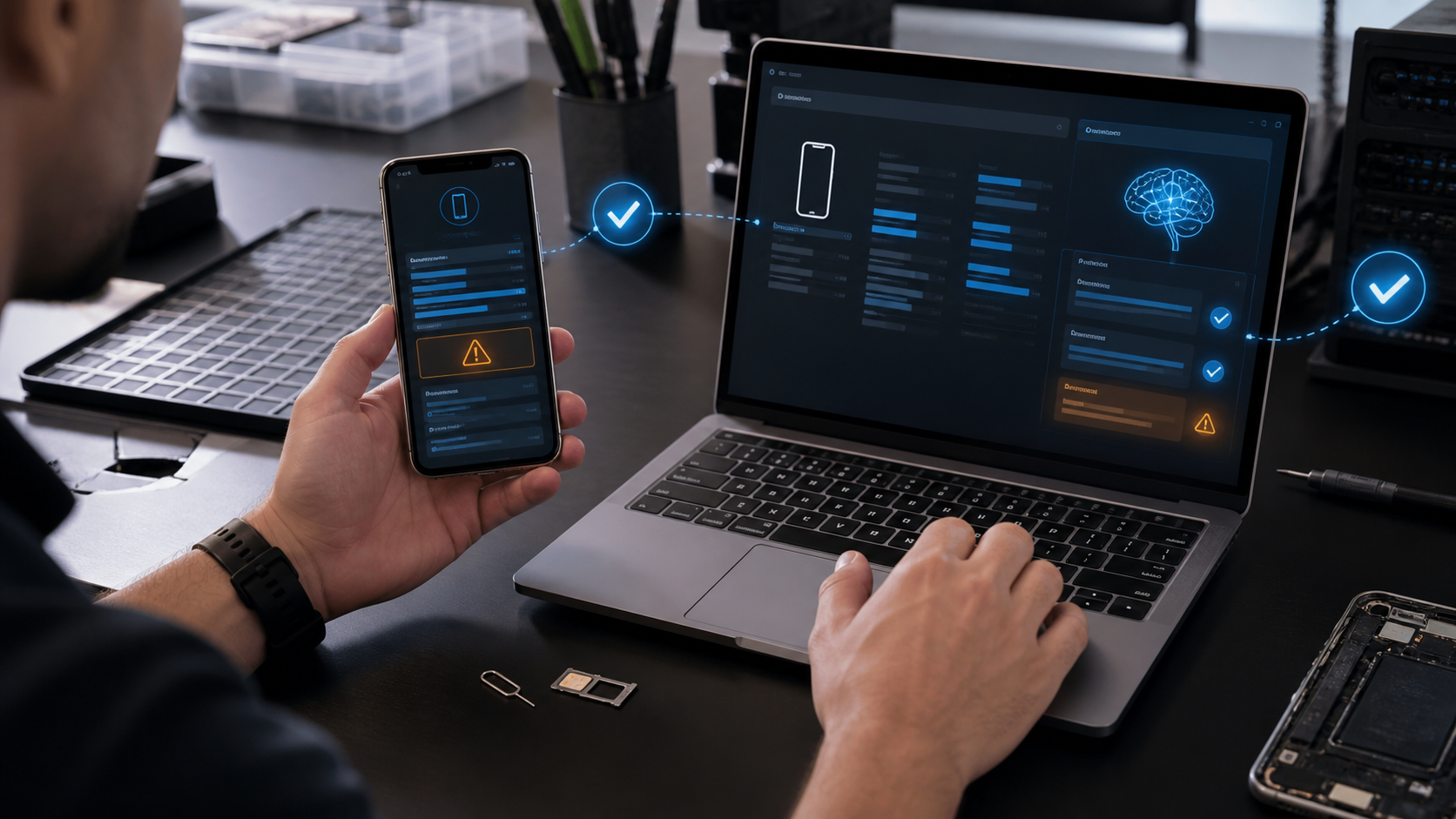
Practical uses for repair shops, resellers and support teams
- Mismatch detection: compare the seller's description, returned brand, model code, storage hints and region indicators. If the listing says one model family but the report points to another, AI can flag the case for review instead of silently accepting it.
- Report triage: reduce a long response into a short checklist: confirm the About screen, test SIM or eSIM behavior, ask for the original box, check carrier lock separately or document a discrepancy before intake.
- Catalog enrichment: connect a returned model code with the right phone model page, brand page and buyer guidance. This helps users understand codes such as SM, TA, LYA or XT without leaving the workflow.
- Support note drafting: prepare a concise internal note for a ticket: what was checked, what matched, what is still uncertain and what proof should be requested from the customer.
- Batch prioritization: for resale operations, group devices into clean, review-needed and incomplete-data queues. AI can help with the queue label, while humans keep control over the final commercial decision.
For teams that process many devices, these steps pair naturally with an IMEI API workflow. The API performs the controlled lookup, while AI handles classification, explanation and queue management around it.
What AI should explain in the report
A helpful AI summary should be boring in the best possible way: clear, traceable and specific. It should say which fields matched the user's claim, which fields were missing and which next check is appropriate. For example, it can explain that an IMEI checksum is valid but that checksum validation alone does not prove the phone is genuine. It can also explain that a model code points to a regional variant, while carrier lock and account lock still need separate verification.
| Question | Good AI behavior | Human or provider responsibility |
|---|---|---|
| Does the model match the listing? | Compare returned brand and model fields with the seller description. | Inspect the device settings and physical condition. |
| Is the phone carrier unlocked? | Explain relevant report fields and uncertainty. | Confirm with the carrier or device settings. |
| Is the IMEI safe to publish? | Warn against posting the full identifier publicly. | Share sensitive identifiers only in trusted channels. |
| Can the phone be located? | State that an IMEI is an identifier, not a consumer tracking tool. | Use Apple, Google, carrier or law-enforcement processes where appropriate. |
What AI should never claim
AI cannot turn a syntactically valid IMEI into proof of ownership, an exact location or a guaranteed blacklist result. It should not guess that a phone is unlocked, infer a stolen-device report from a vague field or quietly send the full identifier to an unknown service. Those decisions belong to the provider, carrier, account owner or an authorized support process.
The same rule applies to test data. A random IMEI generator can create safe fixtures for validation and UI testing, but it does not create a real device record. AI should label that distinction clearly instead of turning a plausible-looking number into a confident story.
There is also a privacy boundary. A full IMEI is a device identifier and should be handled with care. AI features should mask identifiers in summaries where possible, avoid sending the same number to unrelated tools and keep provider credentials on the server. Logging is useful for audits, but logs should not become a second place where sensitive device data leaks.

A safer implementation pattern
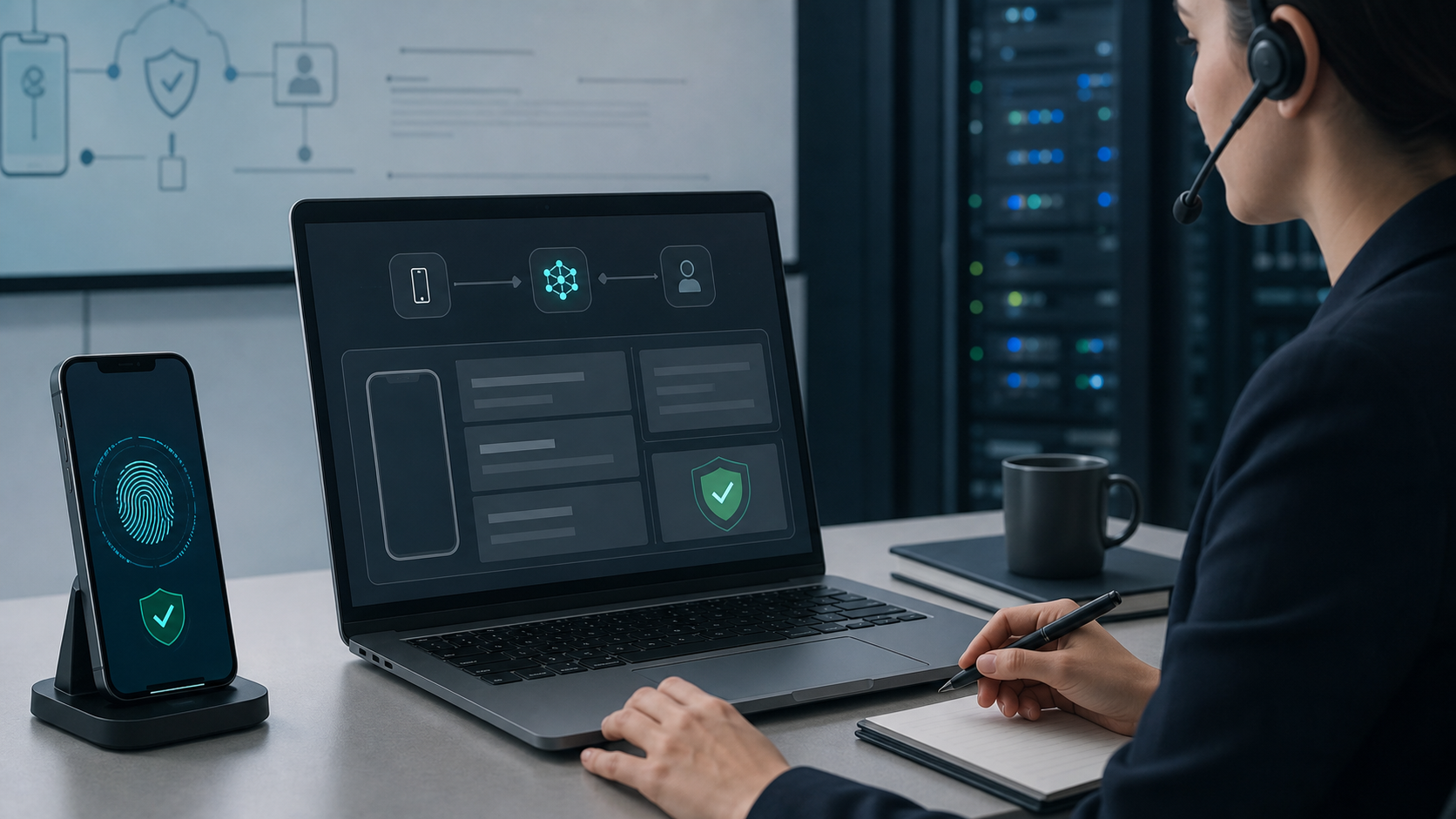
The safest product pattern is simple: validate locally, query from the server, summarize after the source response exists and keep the original report available for review. The browser should never contain the provider API key. The AI layer should receive only the fields it needs, and the output should link back to the data source or report section that supports the explanation.
For a repair shop, this can look like a ticket note that says: model matches, region is different from the seller's wording, eSIM support should be tested, carrier lock is not proven by this report. For a resale marketplace, it can look like a moderation queue that separates obvious matches from devices that need more proof. For a support desk, it can become a response draft that explains the next step without exposing unnecessary identifiers.
The human-readable report is the product
The best AI feature is often a humble one: show what was found, what remains unknown and what the user should check next. That approach keeps the data sources visible, protects the user from overconfident automation and makes an IMEI check useful outside the SEO page where it started.
IMEI verification becomes more valuable when the result is understandable. A buyer wants to know whether the checked phone matches the listing. A reseller wants to know which devices need more proof. A repair shop wants a clean intake note. AI can help all three, but only when it respects the limits of the underlying data.
That is the standard IMEI.guru should aim for: evidence first, explanation second, human decision last. The technology can be fast, but the answer still needs to be careful.
Why this guide matters for IMEI decisions
How AI can organize device data, flag mismatches and speed up support without pretending to know more than an IMEI report proves. The practical value is that a user can move from a short device identifier to a better decision about buying, repairing, reselling or documenting a phone. A strong IMEI workflow reduces guesswork by connecting the number with brand, model family, report fields and the real-world situation in which the phone is being checked.
For search visitors, the important question is rarely theoretical. They usually want to know whether the phone in front of them matches the listing, whether a model code makes sense, what additional proof they should ask for, and which limits still require a carrier, seller or official support channel. This AI & Telecom article should answer those questions directly.
Recommended verification workflow
- Validate the IMEI format first. Use the IMEI calculator or checksum validation before sending a lookup request. A malformed number can waste time and create false uncertainty.
- Compare identity fields. Check brand, model, model code, region hints and device type against the phone settings, seller listing, invoice or repair ticket.
- Separate identity from status. Model identification is not the same as blacklist, carrier lock, financing, warranty or account lock status. Treat each as a separate question.
- Keep evidence together. Save the report, date, seller messages, photos of the About screen and any carrier confirmation so the decision can be reviewed later.
Used properly, an IMEI lookup is a first filter. It should make the next inspection step clearer, not replace human review or official provider records.
Common mistakes to avoid
- Do not post a full IMEI publicly. Share it only with trusted lookup tools, carriers, repair providers or private buyer channels.
- Do not rely on screenshots alone. Ask for fresh device-setting photos or run the check again when the purchase risk is meaningful.
- Do not confuse a valid checksum with a clean device. A valid IMEI format only proves that the number is structurally plausible.
- Do not ignore model variants. Two phones with the same retail name can differ by region, carrier, SIM behavior or firmware path.
How this connects with the rest of IMEI.guru
This article fits into a broader verification path across IMEI.guru: IMEI check, how to read an IMEI report, IMEI.guru data sources, IMEI API workflow, used phone reviews. Internal links are useful because they let a visitor continue from the current topic into model lookup, report interpretation, status checks and practical buying guidance without starting over.
For SEO, that structure also matters. Search engines and AI answer systems can better understand the page when the article clearly explains the entity, the task, the limits of the data and the next relevant pages. A useful IMEI article should therefore be specific, internally linked and honest about uncertainty.
Bottom line
AI and IMEI Verification: Where Automation Helps and Where It Stops is most useful when it helps the reader act carefully. Confirm the identifier, compare it with the physical device, understand what the report can and cannot prove, and use the related IMEI.guru pages to check the next question before money, repair work or resale documentation changes hands.