A new public IMEI Generator for testing workflows
IMEI.guru now has a public IMEI Generator for creating valid-format IMEI numbers without opening the account dashboard. The tool is designed for QA teams, developers, support agents and device-data workflows that need realistic IMEI-shaped fixtures without exposing real customer devices.
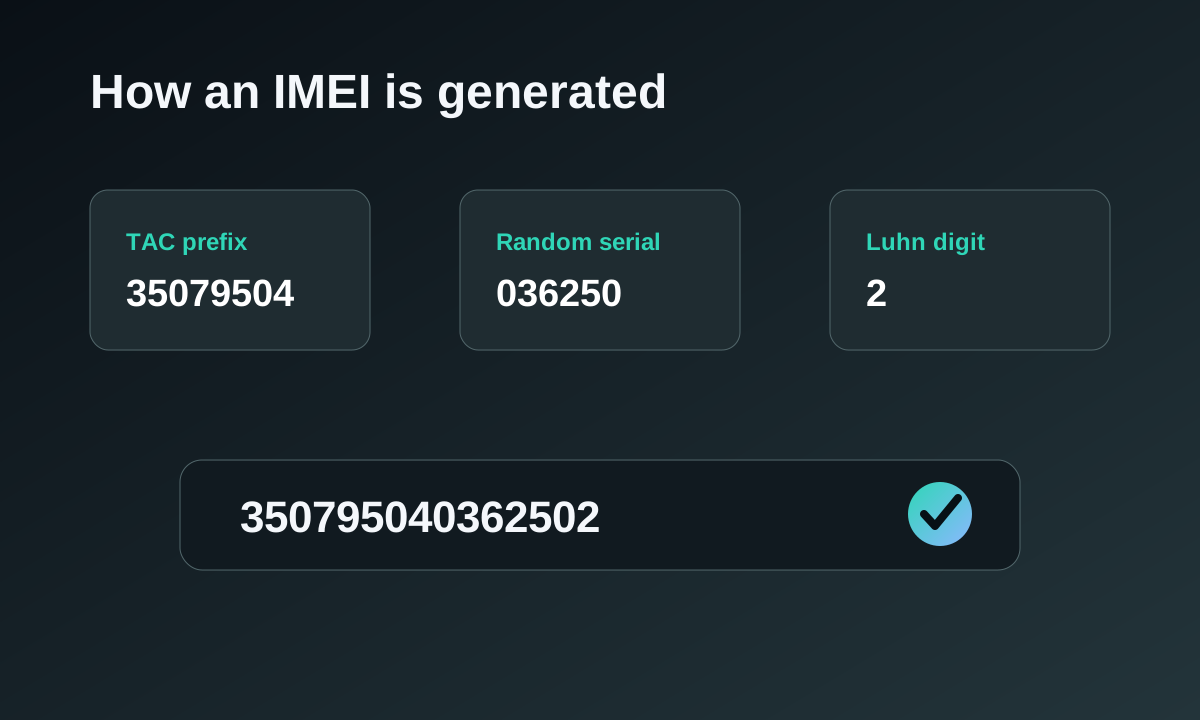
The generator uses TAC prefixes from the IMEI.guru model dataset, adds six random serial digits and calculates the final checksum digit with the Luhn algorithm. That means the generated values pass normal IMEI format validation, while still being clearly treated as test data rather than proof of a real phone record.
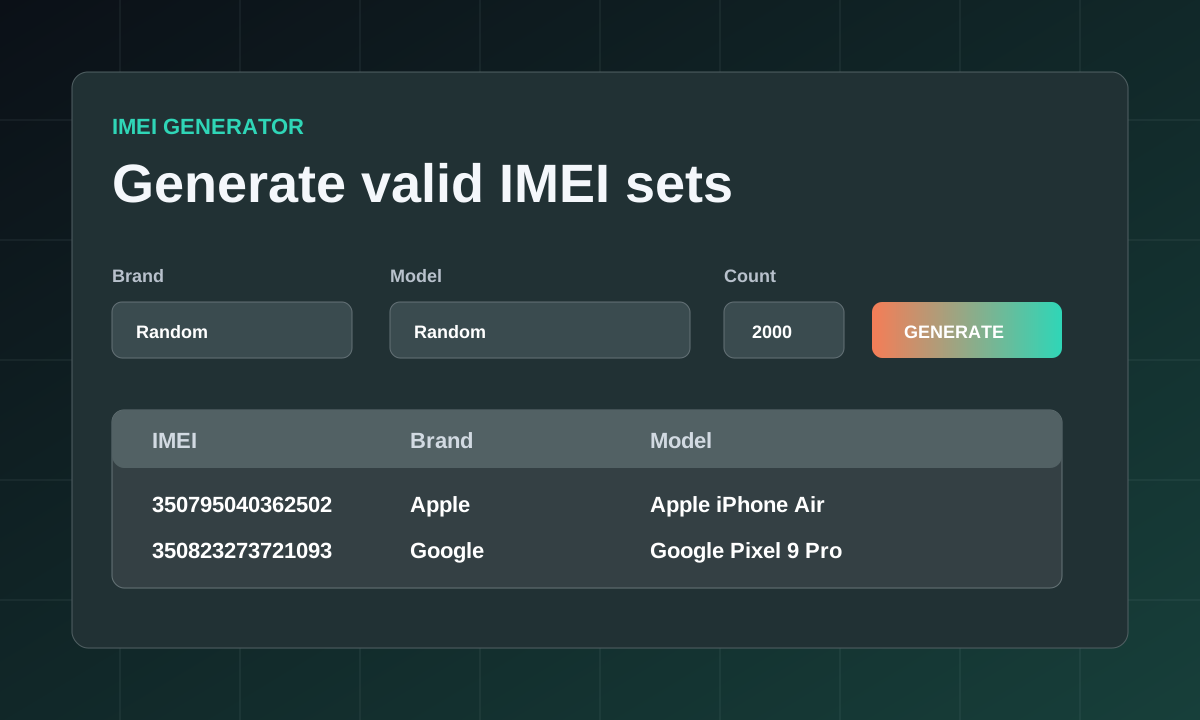
Random brand, random model or targeted device family
The default setup is intentionally simple: Brand is set to Random, Model is set to Random and the count field can generate any whole-number batch from 1 to 2000. This is useful when you want broad test coverage across multiple manufacturers.
If you need more control, choose a specific brand such as Apple, Samsung, Google, Xiaomi, Motorola or Nokia. You can then keep the model as Random for that brand, or select one exact model family from the list. The generated results show IMEI, brand and model in a table, with a separate copy-ready IMEI-only list underneath.
How the generated IMEI is built
Every generated value starts with a TAC, the first eight digits of an IMEI. The TAC is followed by six random digits. The fifteenth digit is calculated using the Luhn checksum method, the same validation logic used by the IMEI Calculator.
Where generated IMEIs are useful
- Form testing: fill IMEI inputs with structurally valid 15-digit values.
- Bulk QA: create 100, 500, 1000 or custom-size lists for import and export testing.
- Support training: demonstrate IMEI workflows without using a real customer's identifier.
- Frontend demos: show result tables, CSV download and copy behavior with predictable test data.
If the task is real device identification, use the main IMEI check instead. If the task is checking many real identifiers through an API workflow, use Bulk IMEI Check. If the task is model education and internal linking, continue into the phone model database.
Important limitation: generated does not mean real
A generated IMEI can have a valid checksum and a realistic TAC prefix, but it should not be interpreted as a live device record. It is test data. Do not use generated values for resale verification, blacklist decisions, warranty claims or carrier support questions.
For those situations, start with the actual IMEI from the device settings, SIM tray, box or invoice, then read the results alongside our IMEI report guide and related device pages. The generator is here to make testing safer, faster and less dependent on real customer identifiers.
Why this guide matters for IMEI decisions
IMEI.guru now includes a free IMEI Generator that creates valid-format random IMEI lists from TAC prefixes, serial digits and Luhn checksum validation. The practical value is that a user can move from a short device identifier to a better decision about buying, repairing, reselling or documenting a phone. A strong IMEI workflow reduces guesswork by connecting the number with brand, model family, report fields and the real-world situation in which the phone is being checked.
For search visitors, the important question is rarely theoretical. They usually want to know whether the phone in front of them matches the listing, whether a model code makes sense, what additional proof they should ask for, and which limits still require a carrier, seller or official support channel. This Product Update article should answer those questions directly.
Recommended verification workflow
- Validate the IMEI format first. Use the IMEI calculator or checksum validation before sending a lookup request. A malformed number can waste time and create false uncertainty.
- Compare identity fields. Check brand, model, model code, region hints and device type against the phone settings, seller listing, invoice or repair ticket.
- Separate identity from status. Model identification is not the same as blacklist, carrier lock, financing, warranty or account lock status. Treat each as a separate question.
- Keep evidence together. Save the report, date, seller messages, photos of the About screen and any carrier confirmation so the decision can be reviewed later.
Used properly, an IMEI lookup is a first filter. It should make the next inspection step clearer, not replace human review or official provider records.
Common mistakes to avoid
- Do not post a full IMEI publicly. Share it only with trusted lookup tools, carriers, repair providers or private buyer channels.
- Do not rely on screenshots alone. Ask for fresh device-setting photos or run the check again when the purchase risk is meaningful.
- Do not confuse a valid checksum with a clean device. A valid IMEI format only proves that the number is structurally plausible.
- Do not ignore model variants. Two phones with the same retail name can differ by region, carrier, SIM behavior or firmware path.
How this connects with the rest of IMEI.guru
This article fits into a broader verification path across IMEI.guru: IMEI check, how to read an IMEI report, IMEI.guru data sources, IMEI Generator, IMEI calculator. Internal links are useful because they let a visitor continue from the current topic into model lookup, report interpretation, status checks and practical buying guidance without starting over.
For SEO, that structure also matters. Search engines and AI answer systems can better understand the page when the article clearly explains the entity, the task, the limits of the data and the next relevant pages. A useful IMEI article should therefore be specific, internally linked and honest about uncertainty.
Bottom line
New IMEI Generator on IMEI.guru: Random Brand and Model Test Data is most useful when it helps the reader act carefully. Confirm the identifier, compare it with the physical device, understand what the report can and cannot prove, and use the related IMEI.guru pages to check the next question before money, repair work or resale documentation changes hands.